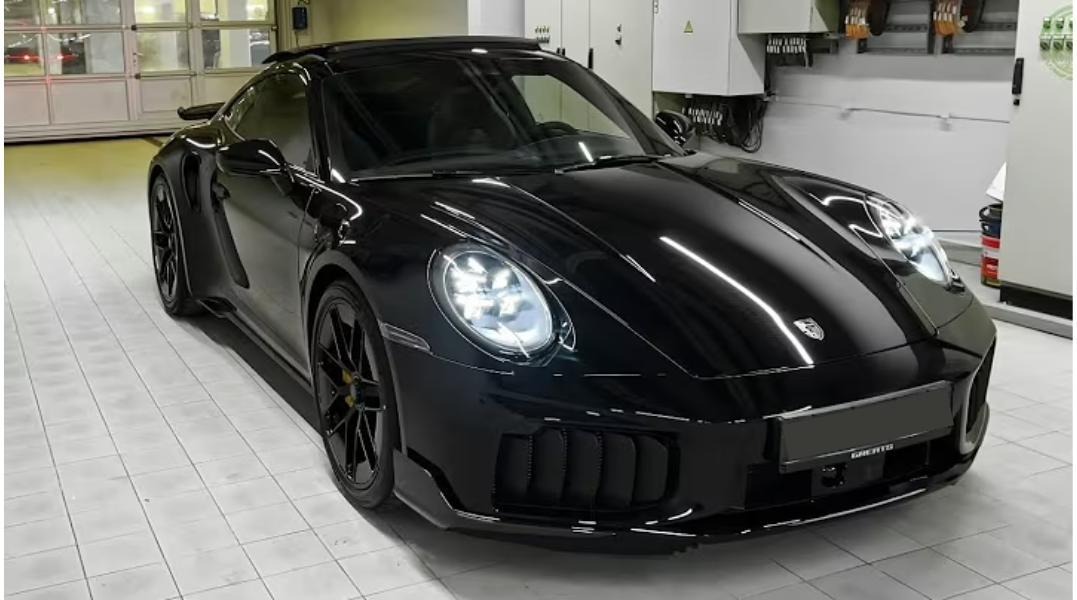
The 2026 Porsche 911 Turbo S represents the absolute top model of the iconic 911 range (excluding limited hypercars like GT2 RS). For decades, the Turbo S badge has stood for a perfect balance between extreme performance, everyday usability, and luxury refinement—and the 2026 version pushes that formula further than ever before.
This generation (internally known as 992.2) is revolutionary because it introduces hybrid technology into the Turbo S for the first time. Despite going hybrid, it is not about fuel economy—it’s purely about more power, faster response, and better performance.
The result? One of the fastest, most advanced, and most usable supercars ever built.
Engine & Hybrid Powertrain (T-Hybrid Technology)
The biggest change in 2026 is under the hood.
Engine Specs
- Engine: 3.6-liter twin-turbocharged flat-6
- Hybrid system: Electric motor + electric turbochargers
- Total power: ~701 hp (≈711 PS)
- Torque: 590 lb-ft (≈800 Nm)
- Transmission: 8-speed PDK dual-clutch automatic
- Drivetrain: All-wheel drive
How the Hybrid System Works
Unlike traditional hybrids (focused on efficiency), Porsche uses what it calls T-Hybrid technology:
- Electric motor integrated into transmission
- Electrically assisted turbochargers (e-turbos)
- Small 1.9 kWh battery
This setup:
- Eliminates turbo lag completely
- Provides instant throttle response
- Improves acceleration and lap times
Essentially, it’s a performance hybrid, not an eco hybrid.
Performance & Speed
This is where the Turbo S dominates.
Key Performance Figures
- 0–100 km/h: ~2.5 seconds
- 0–60 mph: ~2.4 seconds
- Top speed: 322 km/h (≈200 mph)
- Nürburgring lap: ~7:03.92
Real-World Performance Insight
- Faster than many hypercars from a few years ago
- Instant acceleration due to hybrid boost
- Extremely stable at high speeds
- Usable power even in city driving
Recent testing even showed it competing with cars like Ferrari SF90 in acceleration (at lower speeds), which is remarkable for a “daily usable” sports car.
Exterior Design
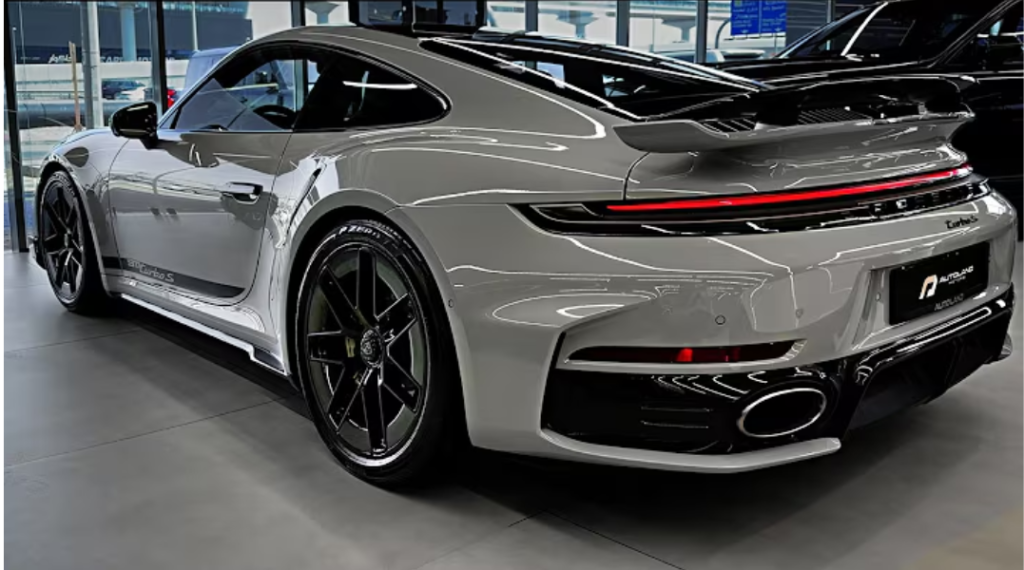
The design evolution is subtle but purposeful.
Key Design Features
- Wider body than standard 911
- Large side air intakes
- Active rear wing
- Redesigned front bumper with air flaps
- Full-width LED light bar
Active Aerodynamics
The car uses advanced aero tech:
- Adjustable front flaps
- Extendable rear spoiler
- Adaptive airflow for cooling and drag reduction
This improves:
- High-speed stability
- Cornering grip
- Braking efficiency
Interior & Luxury
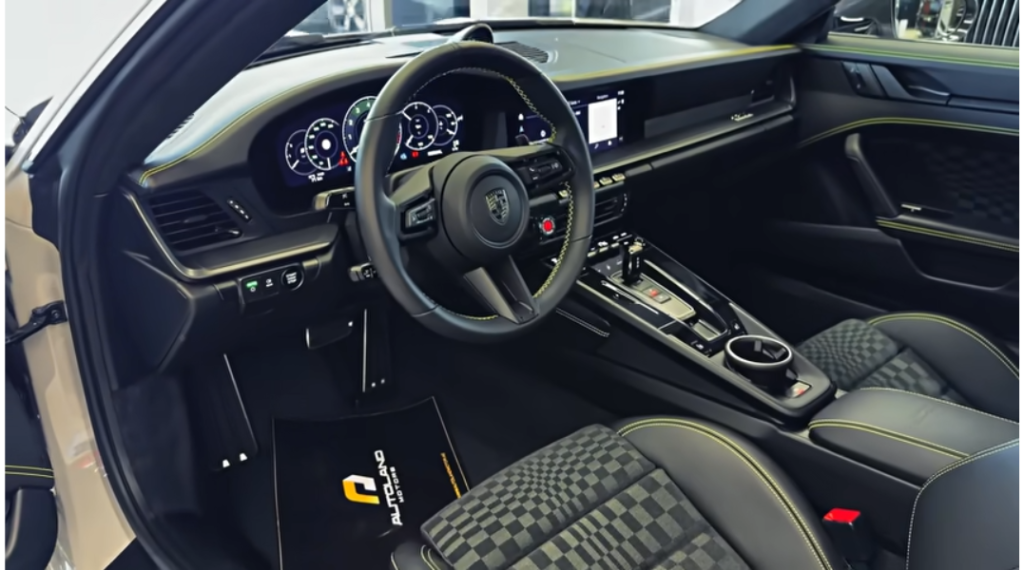
Despite its performance, the Turbo S is also a luxury car.
Interior Highlights
- Full leather interior (standard)
- 18-way adaptive sports seats
- Digital instrument cluster
- Large infotainment touchscreen
- Premium materials and finishes
Technology Features
- BOSE surround sound system
- Porsche Connect (apps, navigation, streaming)
- Voice assistant (Voice Pilot)
Seating Options
- Standard: 2 seats
- Optional: 2+2 seating
This makes it surprisingly practical compared to other supercars.
Chassis, Suspension & Handling
The Turbo S is not just fast in a straight line—it’s incredibly capable in corners.
Key Systems
- PASM (Porsche Active Suspension Management)
- PDCC (Dynamic Chassis Control)
- Rear-axle steering
- All-wheel drive
Braking System
- Porsche Ceramic Composite Brakes (PCCB)
- Largest brakes ever fitted to a Porsche 2-door
Tires
- Wider rear tires for better traction
Result:
- Exceptional grip
- Minimal body roll
- Confidence at extreme speeds
Driving Experience
The Turbo S is unique because it blends extremes:
Everyday Driving
- Comfortable ride (in normal mode)
- Easy to drive in traffic
- Automatic gearbox
Performance Driving
- Explosive acceleration
- Instant throttle response
- Track-ready handling
Many reviewers call it:
“The ultimate all-round supercar”
Technology & Innovation
Hybrid Innovation
- Electric turbochargers eliminate lag
- Regenerative braking charges battery
- Instant power delivery
Digital Features
- Smartphone connectivity
- Remote vehicle control
- Over-the-air updates
Smart Systems
- Adaptive driving modes
- Launch control
- Real-time performance monitoring
Safety Features
Even though it’s a supercar, safety is advanced:
- Adaptive cruise control
- Lane-keeping assist
- Parking sensors & cameras
- Stability management systems
Variants
The Turbo S comes in two main body styles:
Coupe
- Sportier
- Lighter
- Faster
Cabriolet (Convertible)
- Open-top driving
- Slightly heavier
- Same power
Price & Availability
Pricing (Global)
- Coupe: ~$272,000+
- Cabriolet: ~$286,000+
India Price (Expected)
- ₹3.5–₹4.5 crore (approx, imported)
Price varies based on:
- Customization
- Taxes
- Options
Fuel Efficiency
Not the main focus, but:
- ~11–12 L/100 km
- Hybrid improves efficiency slightly
Competitors
The Turbo S competes with:
- Ferrari SF90 Stradale
- Lamborghini Huracán Tecnica
- McLaren 750S
- Audi R8
But its advantage:
It’s the most practical supercar.
Pros & Cons
Pros
- Insane acceleration
- Hybrid tech = no turbo lag
- Everyday usability
- Luxury + performance combo
Cons
- Extremely expensive
- Not as flashy as rivals
- Maintenance costs
Why It’s Special
The 2026 Turbo S is special because:
- First hybrid Turbo S
- Most powerful 911 ever
- Faster than many hypercars
- Still usable daily
It’s not just a sports car—it’s an engineering masterpiece.
Final Verdict
The 2026 Porsche 911 Turbo S is arguably:
The best all-round performance car in the world
It delivers:
- Hypercar-level speed
- Luxury car comfort
- Daily usability
- Cutting-edge hybrid tech
If you want one car that can do everything—this is it.
Table of Contents
Conclusion
The 2026 Turbo S is not just an upgrade—it’s a major evolution. By combining hybrid innovation with Porsche’s legendary engineering, it sets a new benchmark for performance cars.
It proves one thing clearly:
The future of supercars is hybrid performance—not just electric or gasoline alone.